
At home · Step-by-step
Wash, dry, put away: a routine for dog gear
The routine has four steps: sort gear by its care label, prepare each item as its instructions say, air dry with enough space, then put each piece back where you grab it and note what you did.
 By Jess Harlan, Field editor · 5 min read · Published · Updated
How do you wash a dog harness, leash or boots?
The routine has four steps: sort gear by its care label, prepare each item as its instructions say, air dry with enough space, then put each piece back where you grab it and note what you did. Treat every piece of gear as its own set of instructions, even when two items come from the same brand. Ruffwear’s 2022 guide to cleaning dirty dog gear splits its lineup by product type. Boots go in the machine on a cold, gentle cycle with mild detergent. Harnesses are hand washed in warm water with mild soap, rinsed thoroughly, and air dried.
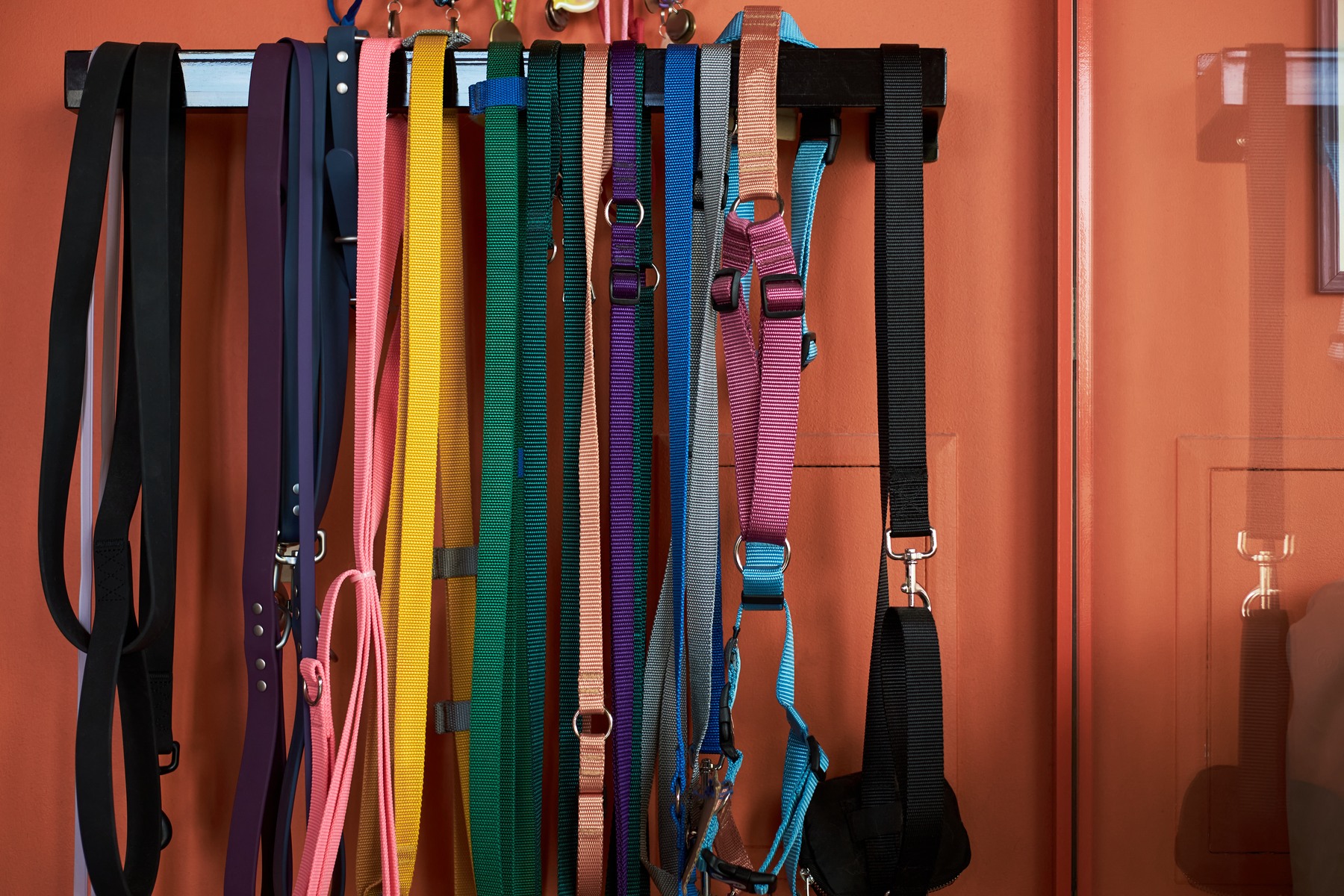
So one maker machine washes its boots and hand washes its harnesses.
Product pages can be more specific still. The Flagline Harness care instructions call for securing fasteners, hand washing in cold water with mild detergent, and air drying. The general guide says warm for harnesses; the Flagline page says cold.

When instructions disagree, confirm which current directions cover your exact item and version. Ask the maker to clarify anything unresolved before washing.
Keep both references with that question. Record the guide title and its date, the exact product-page name, and the conflicting step. For the harness example, the question is narrow: which water temperature, warm or cold, applies to your version, not whether the entire guide should be discarded. Ask the maker directly and save the answer beside its care record.
Match the item in your hands to the instructions written for that item, and don’t extend one product’s method to anything else in the bin. A polyester ripstop harness and a neoprene water jacket are separate decisions.
If you can’t find instructions, identify the exact product name and size, then ask the maker before any wet cleaning. Keep that item out of the wash until its directions are clear.
The Ruffwear guide tells you to shake off dirt and debris before washing leashes, collars, harnesses, and packs. Keep the preparation step with the wash instructions when you make your note.

Prepare before starting
Sort your gear into piles by what the instructions call for, no matter how dirty each piece looks. Pull everything out of the hall closet or the back of the car, set it on a table, and group it: hand wash items in one pile, machine wash items in another, anything with no findable instructions in a third.

Empty and open things before they hit water. Ruffwear’s steps for packs start with removing all contents including water bladders. Boots come out of their storage bag. The guide also says to secure the straps and closures on its boots.
Do the preparation the matching instructions call for. The cited Ruffwear guide describes shaking off dirt and debris for several gear types, but that step alone doesn’t cover brushing or wiping for everything in your pile.
Make a supply list from those instructions. Depending on the exact items, it might include:
- Mild soap or mild detergent
- A basin or sink for hand washing
- A soft brush and a clean rag for spot cleaning
- Hangers, a drying rack, or a shower rod
Check which items the maker says to keep away from bleach, ironing, and dry cleaning. Ruffwear lists those restrictions for apparel and for the Undercoat Water Jacket.
Set a bin aside for the unknown-instruction pile. Those items wait until you’ve contacted the maker.
Where to air dry dog gear
Plan the drying space before the washing starts. Air drying shows up in almost every Ruffwear instruction set: packs, boots, boot liners, harnesses, leashes, collars, packable bowls, and the Basecamp mat all finish on air. Apparel and the Undercoat Water Jacket are hung to dry.
That means wet gear takes up space for a while. Compare the space on a shower rod, folding rack or hooks with the arrangement your instructions require. Check that the proposed location leaves the usual doors and walking routes usable while the items are there.
Water bladders need their own arrangement. Ruffwear suggests propping bladders open with chopsticks so water can escape, then inflating them and letting them dry fully before storage, hanging them upside down on a drying rack or bottle rack, and storing them in the freezer with the caps off to discourage mold.
Give each item its own drying position, following any positioning directions supplied with it.
Neither of these two cited pages gives a drying duration for the harnesses. Check the gear, including padding and seams, before putting it away. Put gear away only when those spots are dry.
Close the loop
Put gear back where you grab it, and note what you did while it’s fresh. The last step of any wash session is returning each item to its home: leash on the door hook, boots back in their storage bag, harness on the peg by the leashes.

A short care record keeps the instructions easy to find again. A page taped inside a closet door or a note on your phone works.
Suggested fields:
| Record field | Your entry |
|---|---|
| Exact product name | ________________ |
| Size or version | ________________ |
| Where instructions live | ________________ |
| Method used | ________________ |
| Date washed | ________________ |
Fill “Where instructions live” with the actual location, such as a hangtag in the gear bin, a product page bookmark, or a sewn-in label. That’s the field that pays off a year from now when the tag’s worn off.
For anything still sitting in the unknown pile, write the exact product name and any model number on the record and mark it pending until the maker replies. Leave it unwashed until then.
If someone else takes over, hand them the current instruction reference as well as the gear. Ask them to confirm the remaining step before changing the status to finished. An entry saying an item was washed doesn’t also confirm it was dried and returned; those can be separate completion notes.
Before finishing, separate gear returned to use from anything still drying or waiting for instructions. Put the status beside the item name and tell the next person where it is. Put away the drying equipment once its job is finished, and keep the route through the room clear.